
How Long Does Asphalt Last? When Is It Time to Repair or Replace?
How Long Does Asphalt Last? When Is It Time to Repair or Replace?
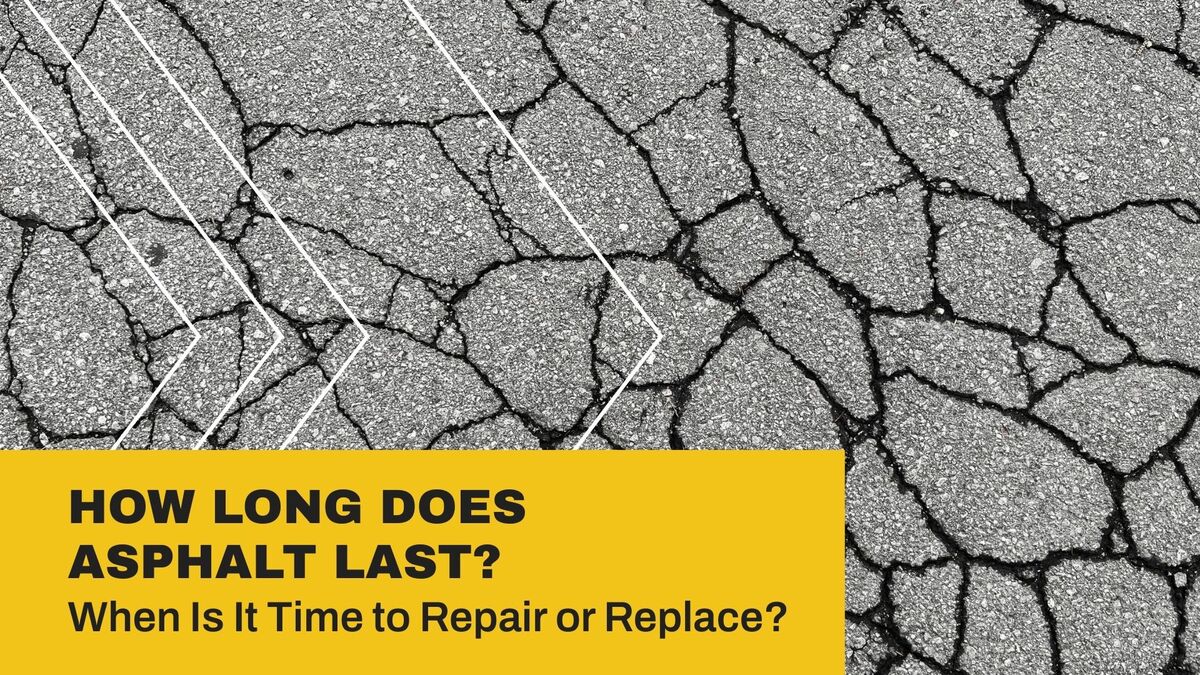
Have you thought about how long your asphalt pavement can realistically perform before it begins to affect your site? For commercial lots and municipal surfaces, that answer influences planning decisions and how often pavement work disrupts daily operations.
Pavement lifespan depends on use, drainage, base conditions, and the quality of the original commercial asphalt paving work. Those factors also help determine when parking lot repair, asphalt resurfacing, or full replacement is the right next step within an overall asphalt maintenance plan.
In this article, we’ll explain how long asphalt pavement typically lasts and how to choose the right next step for your site.
What Determines How Long Asphalt Pavement Lasts
Asphalt pavement does not wear out on a predictable schedule. Two surfaces installed in the same year can perform very differently depending on how they were built and how they are used.
Understanding what influences pavement lifespan helps property managers move beyond age-based decisions and focus on real performance.
Several conditions work together to either extend pavement service life or accelerate deterioration.

Traffic Load and Use Patterns
The way a surface is used has a direct impact on how quickly it wears. High-volume traffic places repeated stress on the pavement structure, which increases fatigue over time.
Certain areas experience even greater strain due to movement patterns:
- Turning lanes and intersections experience more stress than straight travel lanes.
- Loading zones and dumpster areas carry heavier loads.
- Frequent stopping and starting accelerates surface breakdown.
These high-impact zones often show distress first, even when the rest of the lot still appears serviceable.
Drainage and Base Conditions
Water is one of the most damaging forces to asphalt pavement. When drainage is inadequate, moisture works its way into the pavement structure and weakens the base.
Over time, saturation leads to cracking, settlement, and premature failure that surface treatments can’t correct. Proper drainage design and maintenance are foundational for long-term performance.
Quality of Original Installation
How pavement is installed sets the stage for everything that follows. Compaction, material selection, and base preparation all influence durability.
Poorly compacted asphalt is more prone to cracking and deformation. Inadequate base preparation increases the risk of settlement and structural movement. Even strong maintenance practices cannot fully offset weaknesses created during installation.

Situations Where Asphalt Repair Makes Sense
Not every pavement issue requires a large-scale solution. In many cases, targeted repairs are a planned part of responsible pavement management.
When conditions are caught early and the structure remains sound, repairs help extend service life and control costs.
Conditions Suited for Repair
Repairs are most effective when problems are localized rather than widespread:
- Isolated cracks or small potholes
- Limited edge deterioration
- Early surface wear with a stable base
In these situations, repairs address the problem area without disturbing the rest of the pavement.
Benefits of Timely Repairs
Planned repairs play a preventive role when performed at the right time:
- Extend pavement service life at a lower cost
- Reduce safety risks and liability exposure
- Prevent localized issues from spreading
Delaying minor repairs often leads to more extensive damage that limits future options.
When Asphalt Resurfacing Delivers the Best Value
Resurfacing occupies the middle ground between repair and replacement. It provides meaningful renewal while preserving the existing base.
Timing matters. Resurfacing works best when structural conditions support it.
Conditions That Support Asphalt Resurfacing
Resurfacing is appropriate when surface distress is widespread, but the foundation remains intact:
- Broad surface cracking without base failure
- Oxidation or worn-out top layers
- Consistent pavement grade with no major settling
When these conditions are present, resurfacing restores strength and appearance without the cost of full reconstruction.
The Parking Lot Resurfacing Timeline
Resurfacing intervals vary based on traffic levels and maintenance history. Well-maintained lots can remain candidates for resurfacing longer than neglected ones.
Early resurfacing protects the base and delays replacement. Proper surface preparation, including milling and repairs, directly influences how long the resurfaced pavement performs.
When Full Asphalt Replacement Is Necessary
There are times when repairs and resurfacing no longer deliver reliable results. Replacement becomes the responsible choice when structural integrity is compromised.
This decision should be based on conditions, not preference.
Indicators of Structural Failure
Certain signs point to deeper problems that surface treatments cannot resolve:
- Deep cracks that extend into the base
- Repeated repairs that fail quickly
- Widespread drainage or settlement issues
When these conditions appear, replacement addresses the root cause rather than cycling through short-term fixes.
Why Replacement Protects Long-Term Value
Full replacement rebuilds the pavement system from the ground up. It restores a stable foundation, eliminates recurring repair cycles, and supports consistent performance for years to come.
While replacement requires a higher upfront investment, it often delivers the lowest cost of ownership over time.
Repair vs Resurfacing vs Replacement and How to Decide
Choosing the right approach requires balancing cost, performance, and risk. No option works in every situation, which is why condition-based evaluation matters.
Cost and Budget Considerations
Each option carries a different financial profile:
- Repairs involve the lowest upfront cost
- Resurfacing balances cost and extended service life
- Replacement delivers the longest lifespan with the highest investment
Understanding these differences supports realistic budgeting and capital planning.
Performance and Risk Factors
Waiting too long limits your available options. Surface issues that could have been addressed with repair or resurfacing often progress into replacement scenarios.
Early intervention preserves flexibility and improves budget control by allowing proactive decisions rather than reactive spending.
How JK Meurer Evaluates Pavement the Right Way
Accurate recommendations start with a thorough assessment. A professional evaluation provides clarity that surface observations alone cannot deliver.
What a Professional Evaluation Includes
A comprehensive evaluation looks beyond visible distress.
- Surface condition and distress patterns
- Base stability and drainage performance
- Traffic patterns and operational demands
This approach connects what you see on the surface with what is happening structurally.
Recommendations Built Around Long-Term Performance
Our recommendations are based on facts, not default solutions. We explain available options clearly and align them with budget priorities, usage demands, and durability goals so you can plan with confidence.
Make the Right Call for Your Pavement
Choosing between repair, resurfacing, and replacement requires understanding both surface condition and structural performance. With the right evaluation, you gain budgeting insight and longer-lasting results.
When you’re ready to make informed decisions about your pavement, contact us for a professional pavement evaluation.