
The Difference Between a Temporary Pothole Fix and a Proper Repair
The Difference Between a Temporary Pothole Fix and a Proper Repair
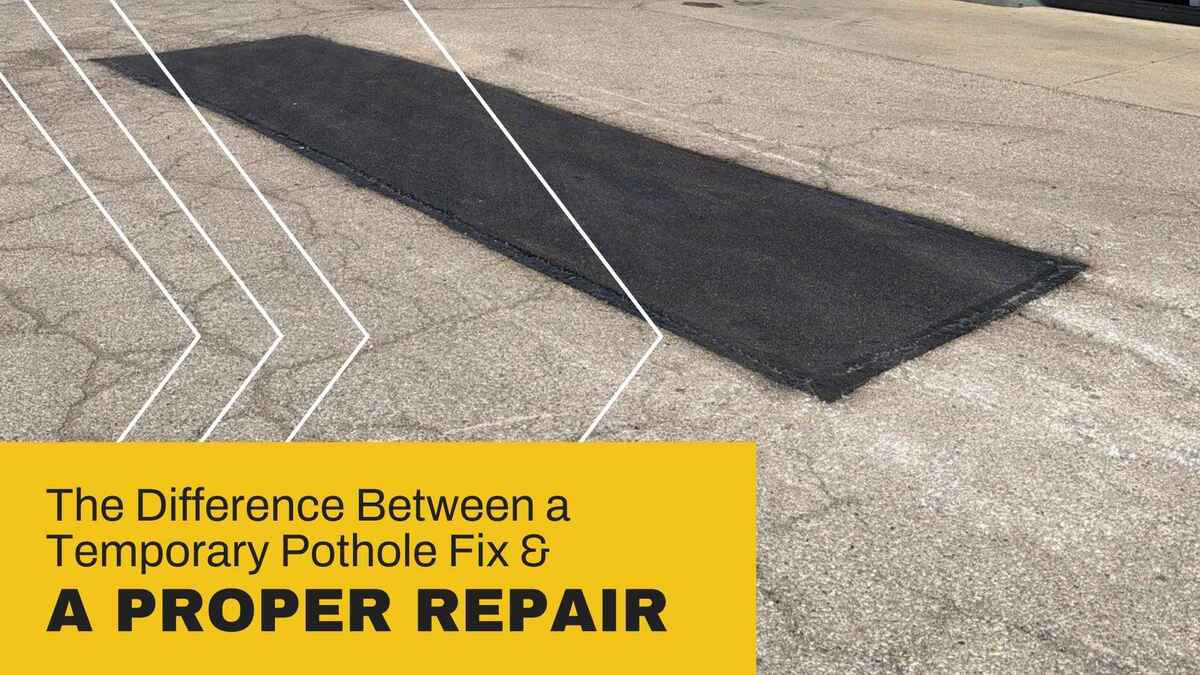
Potholes are one of the most recognizable pavement problems. They are also one of the most misunderstood. Most homeowners and property managers see a hole in the surface and assume the fix is simple. Fill it, pack it down, and move on.
A proper pothole repair is a different process. Done correctly, it restores the strength of the pavement. Done poorly; the same spot keeps failing.
This blog explains the difference between a temporary patch and a proper repair, and what a real repair actually involves.
Temporary Fixes vs. Proper Repairs
Not every pothole repair is the same. The way the work is performed has a much bigger impact on how long it lasts than the materials alone.
What a Temporary Fix Looks Like
A temporary fix usually means pouring cold patch or hot mix into a hole and tamping it down. The failed asphalt around the edges is not removed. The base is not inspected. No bonding agent is applied between the old and new material.
These repairs have a purpose. They can keep a lot drivable through winter or hold a spot until the weather is warmer.
[H3] What a Proper Repair Looks Like
A proper repair follows a process. Here is what ours looks like:
- Grind out the failed area to a clean edge
- Go deeper when the base shows signs of damage
- Apply tack to help the new asphalt bond to the existing pavement
- Install and compact the new material correctly
- Seal the joints where the old and new asphalt meet
Reasons a Repair Fails Within a Season
If a pothole keeps coming back in the same spot, the repair was incomplete. There are a few specific reasons this happens.
No Bond Between Old and New Asphalt
Without a tack coat, fresh asphalt sits on top of the existing surface instead of fusing to it. Traffic pulls the patch loose. The hole returns.
Improper Compaction
Asphalt has to be compacted at the right temperature and to the right density. A patch that is under-compacted will keep settling under traffic. That settling creates dips, soft spots, and another pothole.
The Base Was Never Addressed
Most potholes start with water reaching the base layer. Freeze-thaw cycles weaken the supporting material. The surface loses its foundation and collapses.
Filling the hole on top without checking what is happening underneath means the next failure is already in motion.
3 Signs Your Pavement Needs More Than a Surface Patch
Not every pothole requires the same scope of work. Some areas can be repaired with a clean grind and patch. Others need a deeper dig to address the base.
1. The Pothole Keeps Returning
If the same spot fails repeatedly, the issue is not the surface. It is the base. A proper repair in that location needs to go deeper and rebuild the foundation before new asphalt goes down.
2. Cracking Surrounds the Damaged Area
Alligator cracking or spreading fractures point to wider base failure. A repair limited to the hole leaves the rest of the area vulnerable. We look at the surrounding pavement and recommend a scope that covers the full failure.
3. The Pavement Feels Soft Underfoot
When an area flexes or feels unstable, the base has lost its structural integrity. Surface work will not restore that support. The section needs to be excavated and rebuilt before any new asphalt goes down.
What a Proper Repair Includes
A repair that lasts follows the same process whether it is a single pothole or a larger section of pavement.
Clean Removal of Failed Material
We cut and grind out the failed asphalt to a clean, square edge. This gives the new material a stable area to bond to. When the base is compromised, we excavate further and rebuild it with proper aggregate before any asphalt goes down.
Tack, Install, Compact
We apply a tack coat to the exposed edges and base. We install fresh hot-mix asphalt in the correct lift thickness. We compact it to the proper density while it is at the right temperature. This is what gives a patch the strength to perform like the pavement around it.
Sealed Joints
We seal the joints where the new asphalt meets the existing pavement. This keeps water out of the seam, which is the most common point of failure on patch repairs.
An Honest Assessment of Scope
Sometimes a single repair is the right answer. Sometimes the damage points to a larger problem and resurfacing or replacement makes more sense. We give you a straight answer either way.
Get a Real Repair from JK Meurer Paving
Patching is an important part of pavement maintenance when it is done correctly. The difference between a repair that lasts and one that fails comes down to the process.
At JK Meurer Paving, we treat every pothole repair the same way we treat larger paving work. We assess the full condition, address the cause, and complete the job to a standard that holds up.
If your pavement keeps failing in the same areas, the answer is a closer look at how the repairs are being done. Request an estimate and find out what your pavement actually needs.