
What Goes into Building a Commercial Parking Lot
What Goes into Building a Commercial Parking Lot
.jpg)
A commercial parking lot is one of the first things visitors, tenants, and customers interact with on your property. When it performs well, nobody thinks twice about it. When it doesn't, the problems are visible and disruptive.
Building a lot that holds up under daily commercial use requires more than laying asphalt on open ground. Every phase of construction serves a specific purpose, and the quality of each phase determines how the finished surface performs for years to come.
This blog walks through the full construction process so you know what each stage involves, why it matters, and what to expect along the way.
Site Preparation Sets the Foundation for the Entire Project
Long-term performance is determined before any paving material arrives on site. Get this phase right, and the rest of the project has a solid foundation. Rush it, and problems show up for years.
Clearing, Grading, and Subgrade Compaction
The first step is clearing the site of debris, vegetation, and unstable soil. Once the area is clean, grading establishes the slope that directs water toward drains and away from buildings. Getting this right is critical. Poor grading leads to standing water and drainage problems that surface treatments cannot fix.
The subgrade is then compacted to a consistent density, so it can support the weight above it without shifting. Soft or clay-heavy soils may require additional stabilization before compaction can achieve the necessary results. Rushing through this phase is one of the most common causes of premature pavement failure, and it is also one of the hardest problems to correct after the fact.
Base Installation and Asphalt Placement
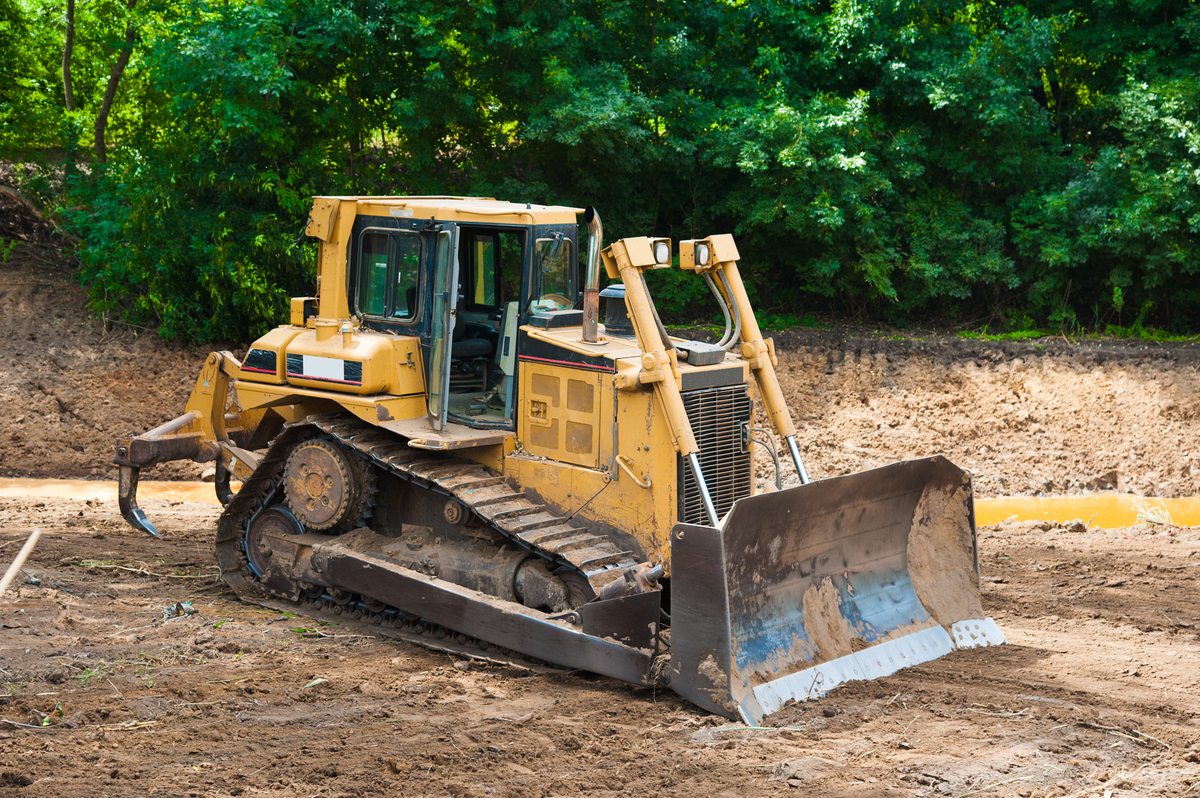
With the subgrade prepared, the next phases build the structural layers that carry the actual load. Material quality, thickness, and compaction all play a direct role in how long the finished surface lasts.
Aggregate Base Material and Compaction
The base layer sits between the subgrade and the asphalt surface. Its job is to distribute vehicle weight across a wider area, reducing stress on the soil below. Base thickness varies depending on expected traffic volume and load conditions.
Aggregate is compacted in controlled lifts rather than all at once. Moisture content during compaction matters as well. Too wet or too dry, and the material will not lock together properly. Each lift is tested and verified before the next layer goes down.
Asphalt Laydown and Roller Compaction
Hot-mix asphalt arrives at temperatures between 275 and 300 degrees Fahrenheit and must be placed while still hot enough to bond properly. A paving machine spreads the material at a consistent thickness, and rollers compact it immediately behind.
Multiple rollers pass at the right timing to produce a dense, uniform surface. Under-compacted asphalt wears faster and allows water to infiltrate the base. Where new asphalt meets existing pavement or structures, joints must be carefully prepared to prevent cracking at those transition points.
Finishing, Curing, and Post-Construction Care
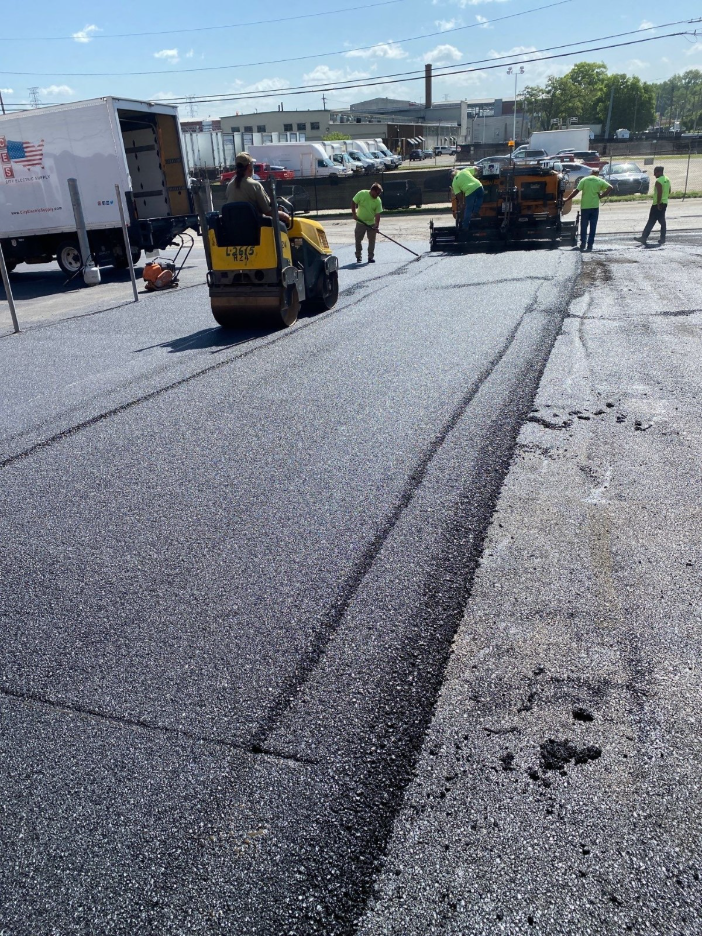
Once the asphalt is placed and compacted, the project shifts to finishing details and early-stage care. This phase determines when you can reopen the lot and how the surface performs in its first months of use.
Striping, Signage, and ADA Markings
After the asphalt has cooled and firmed, the lot is ready for striping. Parking stalls, fire lanes, directional arrows, and ADA-compliant spaces are laid out according to the approved site plan. Accurate striping maximizes usable space and ensures your lot meets local code and accessibility requirements.
Curing Time and Early Maintenance
New asphalt needs time to fully harden. Vehicles can typically drive on the surface within a day or two, but the pavement continues to cure for several months. During that window, heavy loads and sharp turns can leave marks on the surface.
Monitor for settlement after the first few weeks. Check drainage performance after the first few rains. Address any early cracking before it has a chance to spread. Establishing a maintenance schedule with your contractor that includes crack sealing and sealcoating at the appropriate intervals protects the investment you just made in the new surface.
Build Your Next Parking Lot with JK Meurer Paving
A parking lot that performs under real commercial use starts with experienced crews, proper materials, and attention at every phase of construction. Cutting corners during site prep, base installation, or compaction creates problems that cost more to fix than they would have cost to prevent.
At JK Meurer Paving, we keep property managers informed throughout the process and deliver results that hold up under the daily demands of commercial properties across Greater Cincinnati.
Our team manages every phase in-house, so accountability stays with one crew from the first day of site work through final striping.