
What to Know About Converting a Gravel Driveway to Asphalt
What to Know About Converting a Gravel Driveway to Asphalt
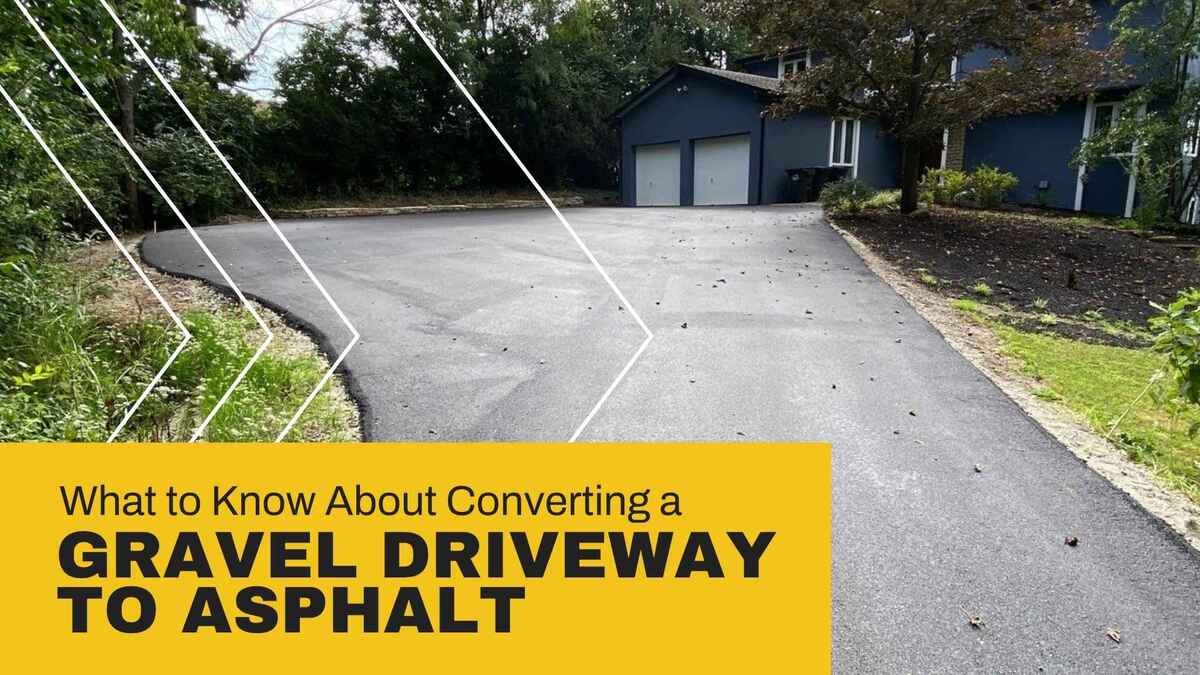
A gravel driveway needs work every year because ruts form after heavy rain and stone drifts toward the edges until the surface needs regrading again. Converting a gravel driveway to asphalt offers a permanent fix. However, the process involves more planning than most homeowners expect.
This article covers what a gravel to asphalt conversion involves and how to plan for one.
Gravel Driveways Require Constant Upkeep
The upkeep on a gravel surface is easy to underestimate because it never shows up as one big expense.
Ruts and Washout Return Every Season
Gravel doesn't stay where it's placed. Season to season, that shows up as:
- Loosening stone shifts under tires and moves with every heavy rain.
- Low spots deepening into ruts.
- Material migrating toward the edges or washes into the yard.
Most gravel driveways need fresh stone and regrading every year or two to stay usable. Those recurring costs add up. Homeowners who have paid for several rounds of stone and grading often find the total cost approaches what a paved surface would have cost.
Dust and Loose Stone Spread Beyond the Driveway
Dry weather turns a gravel driveway into a dust source that settles on cars and siding. Stone gets carried into the garage and thrown by mowers. Snow removal adds its own problem, since plow blades and shovels pull gravel along with the snow.
4 Improvements a Paved Driveway Delivers
Paving improves stability, drainage, snow removal, and curb appeal.
1. A Level, Stable Surface
Asphalt gives you a solid surface that stays put. No shifting underfoot and no ruts forming after storms. Bikes, strollers, and trash cans roll across the surface without catching loose stone.
2. Controlled Drainage
A paved driveway is graded to move water in a specific direction, away from the foundation and off the surface. Gravel lets water find its own path, which is how washout starts.
3. Easier Snow Removal
A smooth surface clears cleanly with a shovel, blower, or plow. Nothing gets scraped up and scattered across the lawn, and there's no spring cleanup of displaced stone.
4. Curb Appeal and Property Value
A finished driveway changes how a property presents from the street. It signals a maintained home and supports resale appeal. Our breakdown of the advantages of an asphalt driveway covers what else the upgrade brings.
What Happens During a Gravel to Asphalt Conversion
Site Evaluation and Grading
The project starts with a look at the existing driveway, the soil beneath it, and how water moves across the property. Grading establishes the slope that directs runoff away from your home and off the driveway surface.
Base Preparation and Reusing Existing Gravel
The base carries the load and determines how long the driveway lasts. Depending on its condition and depth, existing gravel can sometimes be graded and compacted as part of that base, which reduces the material needed. In other cases the base needs additional stone or reinforcement, especially where the soil is soft.
An assessment tells you which situation applies to your property.
Asphalt Placement and Curing
Once the base is compacted, hot asphalt is placed and rolled to a uniform surface. Vehicles can typically use the driveway within a day or two, though the pavement continues to cure for several months. Sharp turns and heavy loads can leave marks during that period.
Our homeowner's guide to driveway paving walks through what installation day looks like.
Timing and Budget for a Driveway Conversion
Converting a gravel or concrete driveway to asphalt comes with a price and a timeline, and we go over both before any work begins.
What Drives the Cost of a Conversion
Size and layout set the baseline. The condition of the ground underneath adds to it, along with any drainage work the property needs.
Site access affects the number as well, since a tight approach slows the crew down. A property with a sound existing base and easy equipment access costs less to convert than one needing significant preparation.
Plan Now for Spring Installation
Paving requires warmer temperatures, which means many conversions happen once the paving season opens again. Reaching out during the winter months gives you an assessment and a firm number for your budget. It also puts you on the schedule before the spring rush fills it.
Convert Your Driveway with JK Meurer Paving
A properly built driveway ends the cycle of stone and regrading. Instead of planning for the next round of material, you get a surface that performs for decades with far less attention.
At JK Meurer Paving, we help homeowners across Greater Cincinnati with quality installation, clear pricing, and honest timelines. If a conversion is on your list, an assessment ahead of the paving season puts you in a good position.